

Video: Anthropic, Introducing Claude Duet
- Waitlist: select Join the waitlist on the Claude Duet product page and use the email on your Claude account. Invites go out in waves, with no date promised.
- What it is: a separate app where Claude works as a proactive agent. It sends a morning brief, checks your connected apps every few hours and messages you only when something needs you.
- Price: no extra cost during the research preview. It’s included in Claude Pro and Max, but it draws on the same usage limits, background checks included.
- Who gets it: US Pro and Max subscribers, through a waitlist that sends invites in waves. Not on Free, Team or Enterprise yet.
- Where: standalone iOS and Android apps, plus claude.ai on a computer.
- Model: Claude Opus 5.5 only. You can’t pick another one.
- Guardrails: it asks before it sends, pays, signs or deletes. Trading securities and moving money between accounts are blocked even with your approval.
Anthropic opened a research preview of Claude Duet on October 21, 2026, three weeks after OpenAI shipped Dots and six weeks after Meta launched Muse. Internally it was called Claude Loop; the name changed when it moved to mobile.
The launch coverage explains the pitch. This guide covers the practical part: how to get in, what it costs you in limits, and where it falls short today.
How to Join the Claude Duet Waitlist
There is no download-and-go. You need three things: a Pro or Max plan, a Claude account in the US, and an invitation from the waitlist.
- Open the Claude Duet product page and select Join the waitlist.
- Enter your name and email. If you already use Claude, use the email on your Claude account.
- Pick your plan and your phone (iPhone or Android). You can also say what you do and what you’d hand off first.
- Submit and wait for the invite email. Open it on your phone and follow the iPhone or Android steps.
- Open Claude Duet and sign in with your Claude account. The app can take a few minutes to show up after you accept.
The one detail that trips people up: access is tied to the email you gave the waitlist. The Apple or Google account on your phone should match it too. A mismatch is one of the reasons Anthropic lists for an invite not working.
Joining doesn’t promise a date. Invites go out in waves.
Is Claude Duet Free? Price and Usage Limits
During the research preview, Duet is included in Pro and Max at no extra cost. It is not on the Free plan. What you actually pay with is your usage limit:
- Duet uses your plan’s five-hour session and weekly limits, at the same rate as chats in Claude.
- Background work counts. The morning brief and the check-ins through the day come out of the same pool, so you can hit your limits sooner than with chat alone. This is why Duet checks your accounts every few hours instead of nonstop.
- Big tasks cost more. A financial model or a slide deck takes more model turns and background work than a quick reply.
- One free reset. When you’re admitted to the preview, you get one full reset of both your five-hour and weekly limits.
If you’re on Pro and already bump into the weekly cap, Duet will make that worse. It’s the main reason to think about Max before handing it a pile of work.
What Claude Duet Can Do
Duet carries over your memory, skills and connected apps from your Claude account, so if Gmail and Google Calendar are already connected, setup is close to zero. It also searches your past Claude chats outside projects, which you can switch off under Settings, Memory.
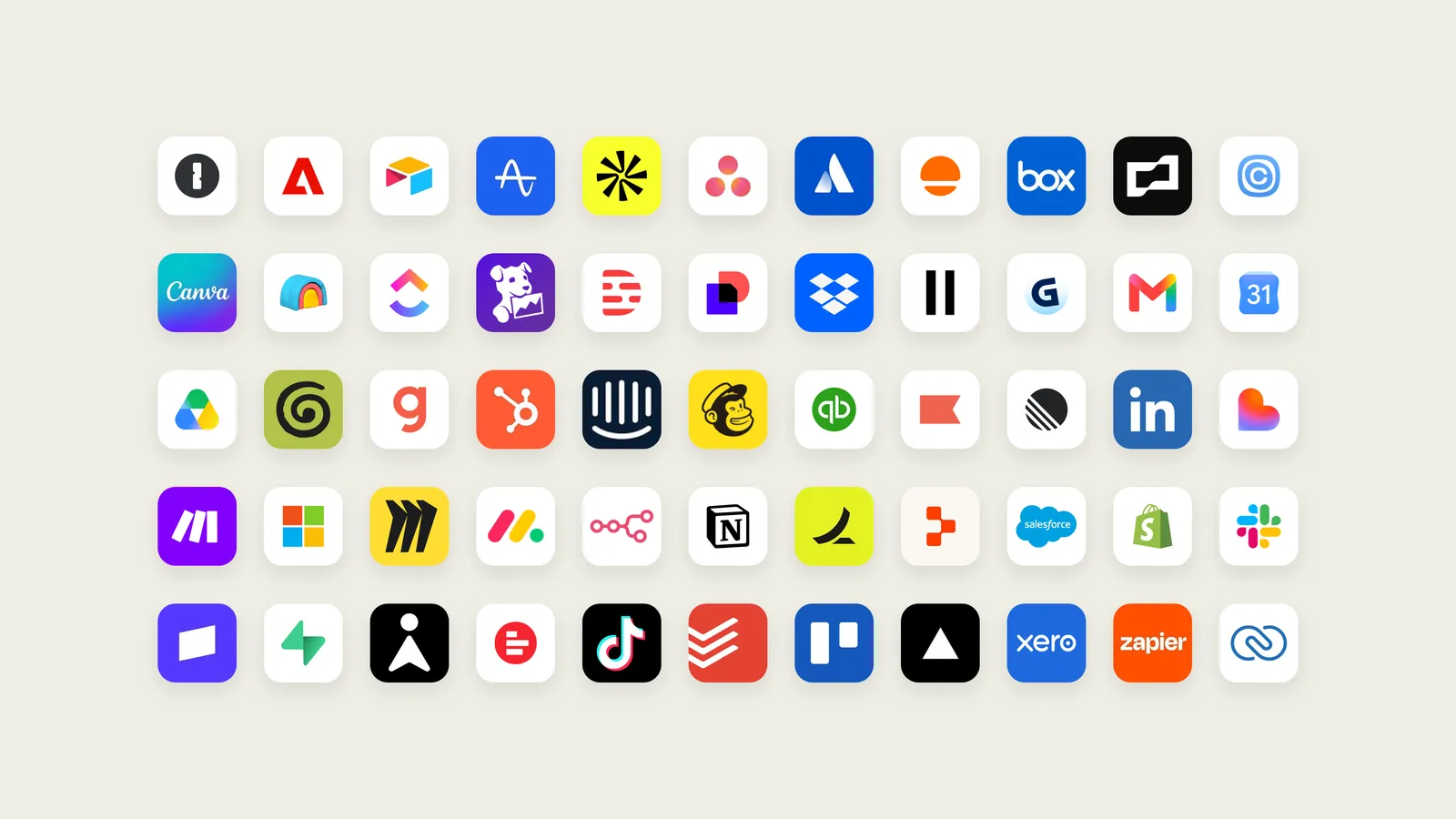
It works on its own virtual machine with its own browser, so your phone can be off. Anthropic says it can reach more than 6,000 connectors and plugins in the Claude Marketplace. The examples it gives are aimed squarely at small businesses:
- find unpaid invoices in QuickBooks or Stripe and draft reminders
- prepare payroll in Gusto with hours, bonuses and reimbursements filled in
- draft a job post and publish it to LinkedIn after you approve
- send agreements for signature through Docusign
- write follow-ups from deal history in HubSpot
- set up and run a Shopify store
Finished work lands as a doc, sheet, deck or dashboard in the Make tab. Running jobs sit in Tasks, and only you can mark one complete.
It can also buy things with Stripe’s Link or Shopify’s Shop Pay. Each approved purchase gets a one-time virtual card, so your real card number never reaches the agent. Signing in with logins saved in 1Password is listed as coming soon.
What It Can’t Do Yet
The support page is unusually blunt about this:
- No model choice. Opus 5.5 decides how much effort a job needs.
- No live browser view. You can’t watch it work or take over.
- It can miss urgent things that arrive between scheduled checks.
- No Microsoft 365 yet, and Slack works with limits.
- No phone calls or texts to other people. Email from your connected accounts is fine.
- No local files. It can read your work in Claude but not change it, and it can’t see files on your computer.
- Personal errands are weaker. It was built around work, so booking tickets isn’t as strong.
- Disconnecting an app stops future access but doesn’t erase what Duet already remembers from it.
Safety: What Needs Your Approval
Before it sends a message, makes a payment, signs a document or deletes anything, Duet shows you exactly what it’s about to do and waits. If you can’t answer right away, it finishes the rest of the task and brings the approval back later. Some actions are blocked outright: trading securities, moving money between accounts and accessing someone else’s account.
Passwords never enter the chat. When a site asks for one, you type it into a separate form on your phone that sends it straight to the cloud browser. A new classifier checks every message and refuses to share the strictest data, like card numbers and government IDs; health or financial details go out only when you’ve explicitly told it to.
Claude Duet vs OpenAI Dots vs Meta Muse
All three run in a private cloud computer and ask before irreversible steps. The differences are price and reach:
| Claude Duet | OpenAI Dots | Meta Muse | |
|---|---|---|---|
| Model | Claude Opus 5.5 | GPT-6 Astra | Muse Spark 1.3 |
| Cheapest way in | $20/mo (Pro) | $100/mo (Pro 100) | Free weekly allowance |
| Access | Waitlist | Gradual rollout | Open |
| Regions | US only | Pro: all but EEA, CH, UK | US only |
| Where you use it | iOS, Android, claude.ai | ChatGPT, Slack, Teams | Mobile, web, WhatsApp, Mac |
On paper Duet is the cheapest of the three paid agents: a $20 Pro plan gets you in, against $100 for Dots. The catch is the waitlist and the shared limits. If you’re outside the US, Dots is still the only one of the three you can use today. For the model underneath, see our Claude Opus 5.5 review .
Frequently Asked Questions (FAQ)
What is Claude Duet?
Claude Duet is Anthropic’s proactive agent app, opened as a research preview on October 21, 2026. It sends a morning brief, monitors your connected apps every few hours, runs tasks on its own cloud computer and asks before sending, paying, signing or deleting. It runs on Claude Opus 5.5.
Is Claude Duet free?
No. It isn’t on the Free plan. It’s included at no extra cost in Claude Pro and Max during the research preview, but it uses your plan’s five-hour and weekly limits, including its background checks.
How do I get access to Claude Duet?
Join the waitlist on the Claude Duet product page with the email on your Claude account, then pick your plan and phone type. You need a US Pro or Max account. Invites go out in waves, and you set the app up from the invitation email on your phone.
Is Claude Duet available on Android?
Yes. Claude Duet is a standalone app for both iOS and Android, and on a computer you can open it at claude.ai.
Is Claude Duet available outside the US?
Not yet. During the research preview it’s US only, and Team and Enterprise plans aren’t included. Anthropic hasn’t given a date for other countries.