
- Sora is gone. OpenAI discontinued the Sora web and app experiences on 26 April 2026, and the Sora API shuts down on 24 September 2026. There is no announced successor.
- Google’s video is now a paid feature. Gemini Omni replaced Veo inside the Gemini app, and Google’s own page says a Google AI subscription is required.
- xAI says Grok is “free to try” and Imagine does text-to-video up to 15 seconds, but the page does not spell out what a free account gets.
- The only unconditionally free route is open weights: run a model like Wan yourself and pay in GPU time instead of subscription fees.
- Most “free AI video generator” listicles ranking today still list Sora. That is how stale this category’s content is.
Type “free AI video generator” into Google and the first page is a wall of listicles, most of which recommend a product that has not existed since April. That alone tells you how fast this category moves and how little of the content covering it is checked.
Here is the actual state of play, with the dates and the sources, then the honest answer about what “free” buys you in AI video today. 👇🏻
What Happened to Sora
OpenAI’s own help centre states it plainly: the Sora web and app experiences were discontinued on 26 April 2026, and the Sora API will be discontinued on 24 September 2026. As you read this, the API has days left.
If you ever generated anything there, two practical notes from the same page. You can export your content at sora.chatgpt.com/sunset, and after the export window closes OpenAI says it will permanently delete data associated with your use of Sora. Purchased ChatGPT and Sora credits can still be spent on Codex rather than being written off.
OpenAI has not announced a replacement video product. Reporting around the shutdown pointed at unit economics rather than quality, with Sora’s compute costs described as roughly a million dollars a day. Treat that figure as reported rather than confirmed, but the direction is not in dispute: video generation is dramatically more expensive per output than text or images, and that cost is exactly why the free tiers in this category keep shrinking.
Google: Video Moved Behind the Subscription
Inside the Gemini app, Gemini Omni has replaced Veo. Google’s own product page for it is unambiguous about access: a Google AI subscription is required, features vary by tier and region, and it is 18+.
What the model itself does, per that page:
- 10-second clips with native audio generation
- Photo to video, up to five of your photos
- Scene extension, where you ask what happens next and the clip lengthens
- Video to video editing, conversationally: change the background, the wardrobe, the lighting
- An AI avatar you add once instead of re-uploading your likeness each time
This is a good product. It is not a free one, and the free tier of the Gemini app does not include it. We covered the model in detail in our Gemini Omni 1.1 Flash write-up.
xAI: “Free to Try”, Terms Unstated
xAI’s Grok page says the product is free to try on the web and in the apps, with SuperGrok for higher limits and multi-agent reasoning. On capabilities it lists text-to-video up to 15 seconds at 720p, with the Imagine section citing up to 2K resolution, plus editing generated content through follow-up prompts.
What the page does not say is how much of that a free account gets. There is no published free-tier video allowance, and third-party write-ups disagree with each other about whether free video generation still exists at all. If you want a number before you sign up, you will not find an official one.
That pattern is worth naming, because it repeats across this whole category: vendors publish the capability and hide the allowance. The capability is marketing. The allowance is the cost.
What People Are Actually Searching For
We pulled US search interest for the main names over the last three months, on a single normalised scale, and the shape of it explains a lot about why this category’s content is so bad.
| Term | US interest (3-month mean) | Shape |
|---|---|---|
| sora | 60.6 | Highest of the four, and rising: 93 on 18 September |
| veo | 36.3 | Flat and steady |
| kling ai | 12.8 | Declining since July |
| runway ai | 9.0 | Declining since July |
The top row is a dead product. Months after the shutdown, the single most searched name in consumer AI video is one you cannot sign up for, and interest in it is going up, not down. That gap between what people search and what exists is the entire reason the listicles are stale: they were written for the traffic, not for the reader.
Autocomplete tells the same story about intent. The suggestions under “free ai video generator” are from text, from image, unlimited, no sign up and reddit. Nobody is shopping for features. They are looking for a way in without a card, and increasingly they are asking Reddit because the tool pages lie.
The Cheapest Workflow Nobody Mentions
If your goal is a finished clip rather than an experiment, the way to stretch any free or cheap allowance is to stop generating video from text.
Text-to-video burns your allowance on the expensive step while you are still deciding what the shot should look like. Image generation, by contrast, is still cheap and often genuinely free. So:
- Lock the frame as a still first. Generate the shot as an image, iterate there until the composition, lighting and subject are right. Ten image attempts cost less than one video attempt nearly everywhere.
- Animate only the keeper. Feed that still into image-to-video, which almost every tool supports, including Gemini Omni with up to five photos.
- Keep clips short and cut. Two well-chosen three-second shots read better than one drifting ten-second take, and they cost less to regenerate when one fails.
- Write the motion, not the scene. With a still as input, the prompt only has to describe the camera move and what changes. Shorter prompts drift less.
This is also the workflow that survives the free tier shrinking, because the expensive step is the one you are doing least.
The Route That Is Actually Free: Open Weights
If “free” has to mean free without an expiry date, the answer is not a website. It is running an open-weights video model yourself.
The practical option today is the Wan family of models, which is open enough to download, run locally and build on. You pay in GPU time and setup effort rather than subscription fees, there is no queue, no watermark imposed on you, no daily cap and no clause about what the service may do with your uploads. Our Wan Streamer piece covers what the real-time side of that stack looks like.
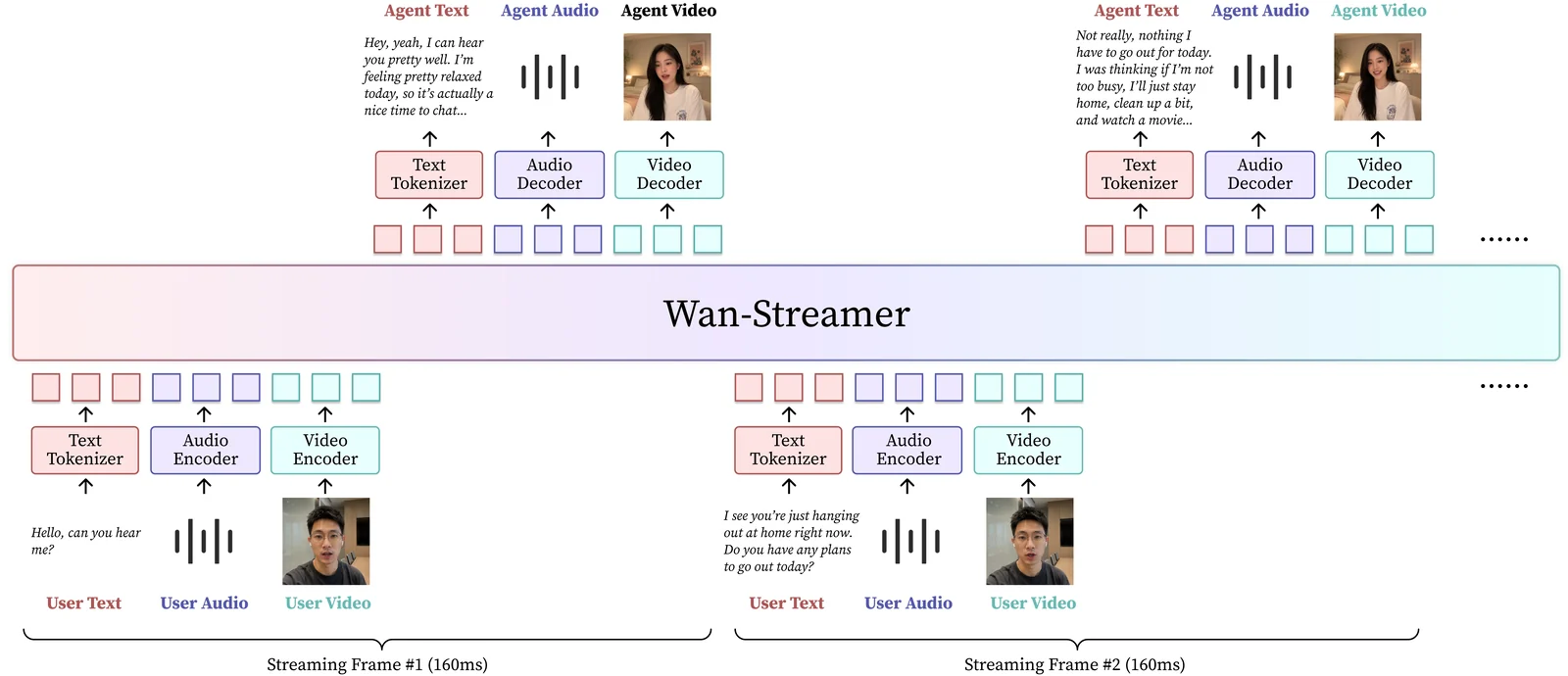
The honest caveats: you need a serious GPU or a rented one, quality still trails the top hosted models on complex prompts, and audio is usually a separate problem. For a hobby project, a loop, a background plate or a batch of variations, that trade is often fine. For one polished 10-second clip with sound, a month of a hosted plan is cheaper than your afternoon.
How to Read a “Free Tier” in AI Video
Whatever site you land on, six questions decide whether the free tier is useful or a demo dressed as a product. Ask them before you upload anything.
| Question | Why it matters |
|---|---|
| Is there a watermark, and where? | A corner mark is liveable. A centre mark makes the output unusable. |
| What resolution and length? | 480p at 5 seconds is a preview, not a deliverable. |
| How many generations, and per what window? | Daily, weekly and one-off trial credits are very different things. |
| How long is the queue? | Free queues are deprioritised. Ten minutes per attempt kills iteration. |
| Can you use it commercially? | Many free tiers are explicitly personal use only. |
| What happens to your uploads? | If you feed it a photo of a real person, this is the question that matters. |
The sixth one is the one people skip. A free video tool that accepts a portrait is collecting faces, and the terms decide whether those faces train the next model.
Why Free Keeps Disappearing Here
Text generation got cheap enough to give away. Images followed. Video has not, and the reason is structural rather than temporary.
A single 10-second clip is hundreds of frames that all have to stay consistent with each other, and increasingly with an audio track generated alongside them. The compute per output is orders of magnitude above a chat reply, and unlike a chat reply it cannot be cached or shortened when demand spikes. That is why the pattern across 2026 has been the same everywhere: generous launch, tightening limits, then either a paywall or a shutdown.
Sora is the extreme version of that curve. Gemini moving video behind a subscription is the normal version. Expect the remaining free tiers to keep shrinking, and do not build a workflow on one.
Who Fills the Gap
The consumer space Sora vacated will not stay empty, but it probably will not be refilled by a new free site. Three directions are visible.
Bundling into a subscription. This is what Google has done: video is not a separate product but a feature inside the AI subscription you already pay for. It is the most sustainable model because the video cost does not have to stand on its own, which is why the others will drift there too.
Short and vertical. Ten seconds of general-purpose cinema is expensive. Narrow jobs, a product spin, an avatar reading a script, a looping background plate, are cheap. Expect surviving free tiers to give away the narrow job and charge for open-ended generation.
Open weights catching up. As open models reach the previous generation of closed ones, the word “free” migrates from a website to your own hardware. Today that route asks for technical skill; the real shift comes when the setup gets easy.
The practical upshot: what stays free will keep changing its name but not its rule. A free tier is a demo, a subscription is a tool, open weights are infrastructure.
If You Still Have Work in Sora
The API shuts on 24 September, which is days from this post. In order:
- Go to
sora.chatgpt.com/sunsetand hit Export. You get an email when it is ready. - Open the archive and confirm it actually downloaded. Discovering a broken export after the service is gone is not a recoverable mistake.
- If anything in your pipeline calls the Sora API, remove the dependency this week rather than finding out on the 24th.
- Spend leftover credits on Codex; refunds go through the normal ChatGPT subscription refund flow.
What to Actually Do
If you want to try AI video once, use a free trial with clear eyes: assume a watermark, assume a few short clips, and export everything you like immediately, because trials expire and products get discontinued.
If you need it monthly, price the subscription against your output. One paid month of a hosted product usually beats a weekend of fighting daily caps across three free accounts.
If you need volume, privacy or control, go open weights. It is the only option nobody can change the terms on next quarter.
If you are writing about this category, check the dates. Half the “best free AI video generator” pages currently ranking recommend a product that shut down five months ago, which is also a decent summary of how much of the AI tool content on the web is worth.
If you want the other end of this pipeline, how the generated file is labelled and how you check it, see our guide on telling whether media was AI-generated.