Grok 4.6 Is Here! Benchmarks, Price and What Changed

Grok 4.6 Is Here! Benchmarks, Price and What Changed

Summary: Grok 4.6 in 30 Seconds Grok 4.6 is SpaceXAI’s new flagship model, announced on August 12, 2026. It is a post-training upgrade on the Grok 4.5 base, not a new foundation model. It scores 61 on the Artificial Analysis Intelligence Index: five points above Grok 4.5 from a month ago, level with GPT-5.6 Sol, two points behind Claude Opus 5. Pricing did not move: $2 per 1M input tokens and $6 per 1M output. Roughly half what rivals charge. A new reasoning tier arrived: xhigh. The model also checks and verifies its own work far more often. The context window is 500K tokens, but any request above 200K doubles the price of the whole call. In the AI race, a month is a long time. In early July we were writing about Grok 4.5. Five weeks later SpaceXAI announced Grok 4.6 and put the model straight back into the frontier conversation. ...
August 13, 2026 ·  9 min ·  1754 words
What Is GPT-5.6-Cyber? OpenAI's New Cybersecurity Model

What Is GPT-5.6-Cyber? OpenAI's New Cybersecurity Model

Summary: GPT-5.6-Cyber in 30 Seconds GPT-5.6-Cyber is a version of GPT-5.6 Sol trained to be far more permissive on cybersecurity work. Announced on August 10, 2026. It is not publicly available. Only verified security firms and researchers in the Daybreak Red tier can use it. In testing it answered 95% of advanced cyber requests. Standard GPT-5.6 Sol answered just 1.5%. It sits at the High capability level under OpenAI’s Preparedness Framework. The delayed Astra model is the one at the Critical threshold. OpenAI has announced a noticeably less restricted model for cyber defenders: GPT-5.6-Cyber. It is a variant of GPT-5.6 Sol tuned for cybersecurity workflows, and it is closed to ordinary ChatGPT users. ...

August 10, 2026 ·  5 min ·  1014 words
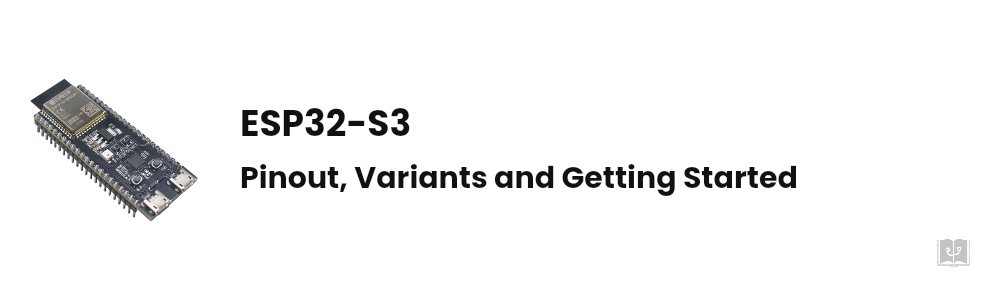
What Is ESP32-S3? Pinout, Board Variants and Getting Started

What Is ESP32-S3? Pinout, Board Variants and Getting Started

Summary: ESP32-S3 in 30 Seconds ESP32-S3 is Espressif’s dual-core Xtensa LX7 MCU running at 240 MHz with Wi-Fi and Bluetooth 5 (LE). 45 GPIOs, 512 KB of SRAM. Three things set it apart from the classic ESP32: built-in USB OTG, 14 touch channels, and a vector instruction set for neural-network workloads. Codes like N8R8 and N16R8 on the board are not arbitrary: N = flash, R = PSRAM, numbers in megabytes. The board has two USB ports and they behave differently. This is where beginners get stuck. GPIO35, GPIO36 and GPIO37 are unusable on many variants, GPIO19 and GPIO20 belong to USB, and four pins do double duty as strapping pins. Depending on the board revision, the RGB LED sits on either GPIO48 or GPIO38. If your blink sketch does nothing, check that first. If you have built something with an ESP32 and then tried to add a camera, audio, or a color display, you have probably hit the wall: not enough pins, not enough RAM, no USB. ...

August 10, 2026 ·  12 min ·  2449 words
Meta Muse Glimmer 30B Review: Benchmarks, VRAM

Meta Muse Glimmer 30B Review: Benchmarks, VRAM

Summary: Muse Glimmer in 30 Seconds Muse Glimmer is a 30 billion parameter agentic model released by Meta Superintelligence Labs on August 10, 2026. The weights are open under Apache 2.0. No cloud needed. Four-bit quantization shrinks the language model to under 20 GB, so it runs on a single consumer GPU with 24 GB or 32 GB of memory. It reads text and images, and returns text. Default context window is 128K tokens, and the model supports more. It clears its size class on agentic tests: 75.5 on MCP Atlas (Gemma4-31B 54.2, Qwen3.6-27B 62.5). On math, 94.7 on AIME 2026. The bundled DFlash drafter speeds generation up 3.1x on an RTX 5090 and 1.8x on an M5 Max. It is distilled from Muse Spark, Meta’s cloud model, so the big model’s agentic behavior is transferred into a small one. On the same day Zuckerberg announced that the weights for Muse Spark 1.2, Meta’s flagship model, will be opened too. No date, just “soon.” An AI agent normally means an API key, an internet connection and a bill that ticks up with every request. Meta just tried the opposite. ...

August 10, 2026 ·  13 min ·  2664 words
How to Use Claude Code with Ollama, Kimi and GLM

How to Use Claude Code with Ollama, Kimi and GLM

Running Claude Code against a non-Claude model works, and you do it on a path the providers document themselves rather than through a hack. Ollama, Moonshot and Z.ai all publish an Anthropic-compatible endpoint. Setup comes down to three environment variables. This guide covers the steps for all three providers, how to make the configuration stick, and the errors people hit most 🔌 The Short Answer Three providers, three addresses Provider ANTHROPIC_BASE_URL Ollama (local) http://localhost:11434 Moonshot / Kimi https://api.moonshot.ai/anthropic Z.ai / GLM https://api.z.ai/api/anthropic MiniMax https://api.minimax.io/anthropic Alibaba / Qwen depends on the plan Add ANTHROPIC_AUTH_TOKEN and a model name and that’s the whole setup. ...

August 8, 2026 ·  9 min ·  1728 words